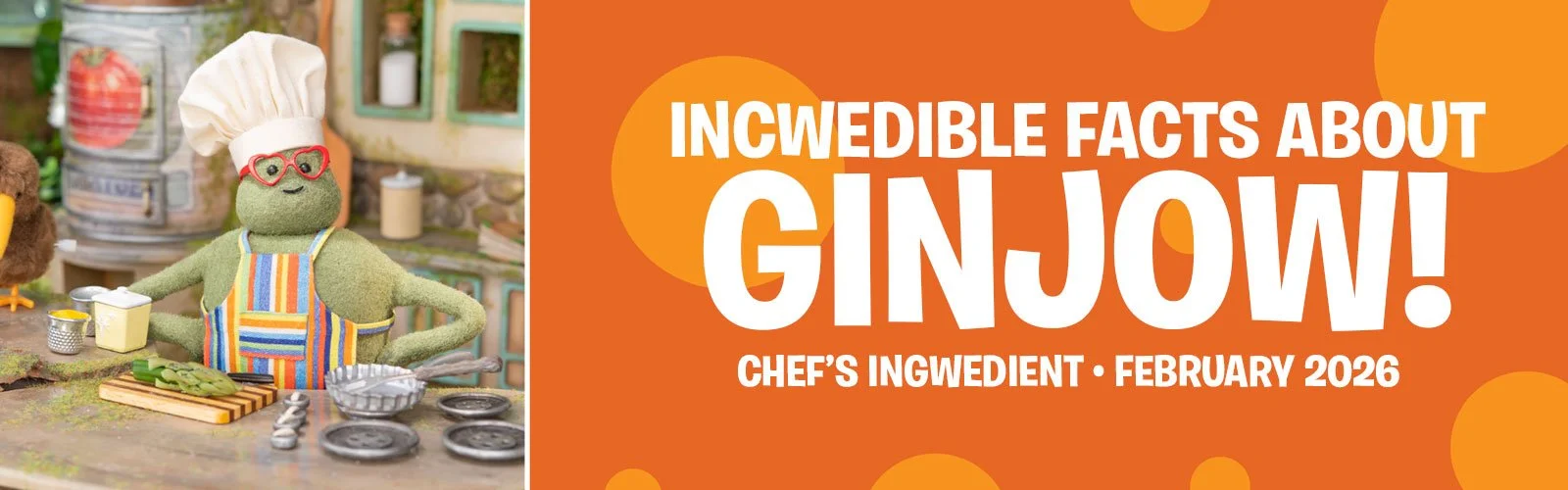
Dis monfth, fwends, Bly am mapshowutwy ewated to shawr owr speshow ingwedient, dat’s not a fwuit, not a begetable, but da humble Ginjow! Pwease dont be foowled, blecause Ginjow ish blanyfing but pwain! It’sh shpicy, zeshty, bland bwight wike da sun! Bly thowt dis monfth was plefect to featuwr a shpicy bland sassy ingwedient. It ish packed wif blantioxidants, bland heps yewww if yewww had tummy twoubles. Bly lub to add a wittle hint blov Ginjow to show many types of dishes - shweet, shavowy, bland ish gweat for meals served mowrning, newn, bland night! Da dweicious weshipees Bly haf fo yew dis week awr a dweicious hot citwus-ginjow dwink to warm yewww up on dose cowd wintow mowrnings bland a jusht ash warming Ginjow-Buttownut Squash Soup to soove da soul! Bof of dese weshipees highwite da mewtiful woot dat ish Ginjow. Blejoy evwybody bland wet’s cewebwate Ginjow!
Did yewww know…
Ginger is a Rhizome, along with Tumeric, Galangal, and Cardamom!
Ginger has been used as medicine for over 1000 years, especially for nausea.
Ginger can be eaten between meal courses as a palate cleanser.
One type of ginger, called Alpinia boia, can grow VERY tall: sometimes it reaches over 27 feet in height!
The first written mention of Ginger occurred over 3000 years ago, around 500 BCE, when Confucius wrote that he ate it with every meal!
Gingerbread's origins trace back almost 5000 years, to ancient Egypt and Greece, where they made a ginger-spiced honey cake.
Many cultures love crystalized Ginger: pieces of young, tender ginger root cooked in sugar syrup and rolled in granulated sugar. Dewicious!
In the 1850s, an apothecary named Thomas Cantrell created a non-alcoholic, carbonated alternative to fermented “ginger beer”: golden ginger ale!
India ranks highest in overall ginger consumption worldwide.
Nigeria and Nepal come in second and third.